BE A LAZY GARDENER– Let Your Yard Sleep In!
After a too long winter, we are beginning to see the glimmers of Spring, as green shoots valiantly push through residual snow and temps are forecasted to rise in the week ahead. There’s a strong temptation to rush into our gardens and yards to start “cleaning up.” Resist this urge and protect the pollinators that are still sheltering in your garden under fallen leaves and in plant stalks!
Please wait until temperatures are consistently above 50 degrees (day and night ) for a least a week before removing fallen leaves. But why remove leaves at all? A 2" to 3” layer of leaves provides free, organic mulch that suppresses weeds, retains soil moisture, improves soil structure and protects beneficial insects.
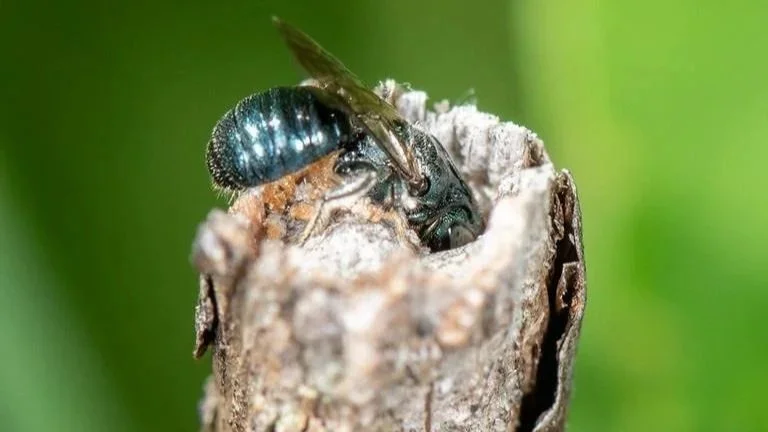
Hollow plant stems provide year round homes for native bees. In spring you can trim the hollow stems of last year’s perennials such as coneflowers, sunflowers, joe pye weed, milkweed, bee balm, pokeweed etc. to a height of 8" to 24” which allows easy access for queen bees looking for a nesting area.
Leave these trimmed stalks standing and they will serve as nurseries for native bees to lay their eggs and raise their young. New plants will grow around the stalks, camouflaging the old stalks, which will decompose over time. Native bees are slow to leave their nests. In 2026 hibernating bees emerge from 2024 stems. They will build their nest this year in 2025 stems. All the more reason for us to be lazy gardeners this season!
Here’s a great poster from the XERCES Society telling the story of stem nesting bees.